Temperature control is the difference between amateur and professional candle making. Understanding precise temperature requirements for each wax type prevents common defects and ensures consistent, high-quality results every time.
1 Master Temperature Guide by Wax Type
This comprehensive table shows the exact temperatures you need for each phase of candle making:
| Wax Type | Melting Point | Add Fragrance At | Pour Temperature | Notes |
|---|---|---|---|---|
| Soy Wax | 113-127°F (45-53°C) |
175-185°F (79-85°C) |
120-140°F (49-60°C) |
Lower pour temp reduces frosting |
| Paraffin | 115-149°F (46-65°C) |
185-195°F (85-91°C) |
110-140°F (43-60°C) |
Higher temps for better adhesion |
| Beeswax | 144-149°F (62-65°C) |
160-170°F (71-77°C) |
155-160°F (68-71°C) |
Natural honey scent present |
| Coconut Wax | 124-127°F (51-53°C) |
129°F (54°C) |
110-130°F (43-54°C) |
Excellent scent throw |
| Parasoy Blend | 115-135°F (46-57°C) |
180-185°F (82-85°C) |
125-145°F (52-63°C) |
Combines best of both waxes |
💡 Pro Tip: Always Use a Thermometer
Visual cues are unreliable. Invest in a quality digital thermometer for consistent, accurate temperature monitoring throughout the entire process.
2 Understanding Flash Points
Flash point is the temperature at which fragrance oil vapors can ignite. It's critical for both safety and scent quality.
⚠️ Critical Flash Point Rules
- ! Never add fragrance above its flash point or you'll lose scent strength and create safety hazards.
- ! Most fragrance oils have flash points between 140-200°F (60-93°C). Always check your supplier's specifications.
- ! Add fragrance at 5-10°F below the flash point for optimal binding and scent retention.
How to Use Flash Point Information
- 1 Check the flash point on your fragrance oil's technical data sheet
- 2 Heat wax to the recommended temperature for your wax type
- 3 Let wax cool to 5-10°F below the fragrance flash point
- 4 Add fragrance oil and stir gently for 2 minutes
3 Environmental Temperature Control
Your workspace temperature significantly affects candle quality:
Ideal Conditions
- ✓ Room temp: 70-75°F (21-24°C)
- ✓ Humidity: 40-60% relative humidity
- ✓ No drafts: Air movement causes uneven cooling
- ✓ Stable temperature: Avoid fluctuations during curing
Conditions to Avoid
- ✗ Too cold: Below 65°F causes poor adhesion
- ✗ Too hot: Above 80°F may cause sweating
- ✗ Direct sunlight: Uneven heating and discoloration
- ✗ Near HVAC vents: Rapid temperature changes
Pre-warming containers: Heat containers to about 100°F (38°C) before pouring to improve adhesion and reduce wet spots, especially important for soy wax.
4 Temperature Troubleshooting Guide
Most candle defects are temperature-related. Here's how to diagnose and fix them:
Problem: Sinkholes / Cavities
Cause: Wax poured too hot or cooled too quickly, trapping air pockets
Solution: Lower pour temperature by 5-10°F and ensure room is at stable 70-75°F. May require second pour to fill depressions.
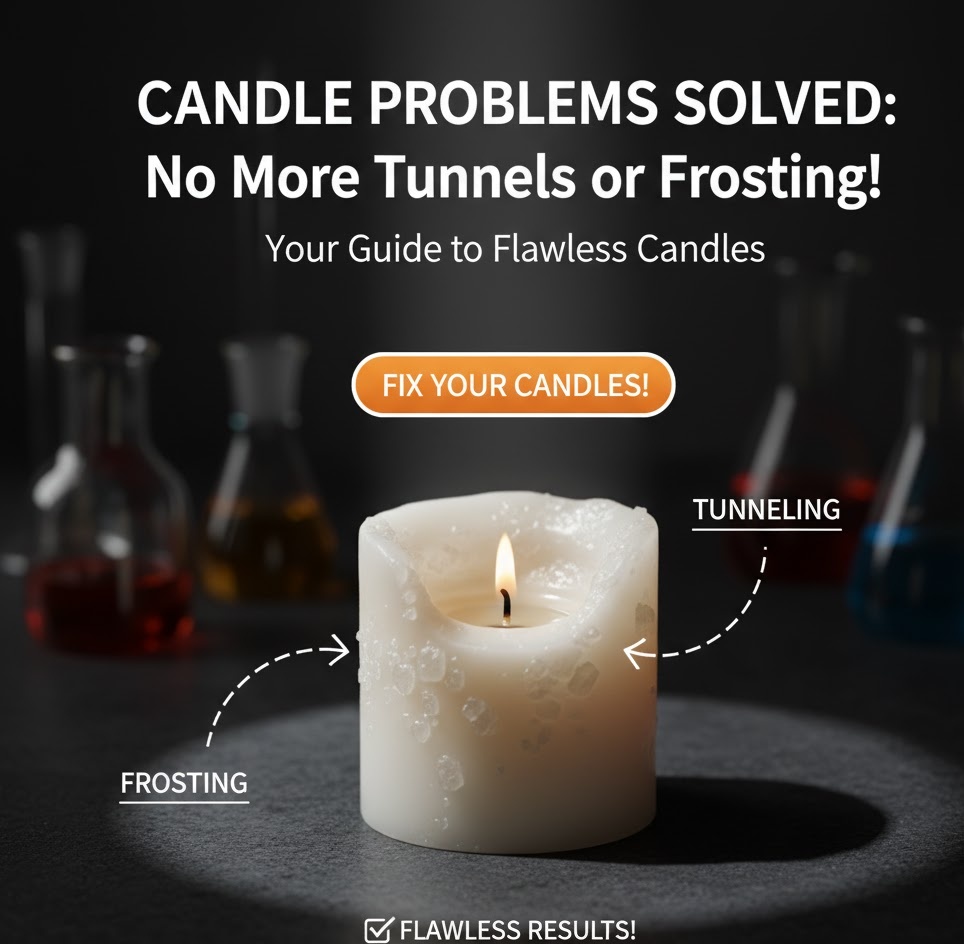
Problem: Frosting (White Crystalline Surface)
Cause: Rapid cooling or temperature fluctuations (common with soy wax)
Solution: Pour at lower temp (120-135°F for soy), cool slowly in stable environment, avoid refrigeration.
Problem: Wet Spots (Wax Pulls from Container)
Cause: Pour temperature too low or container not pre-warmed
Solution: Pre-heat containers to 100°F, increase pour temp by 5-10°F, ensure room temp is adequate.
Problem: Cracking
Cause: Extreme temperature changes during cooling
Solution: Never refrigerate candles. Cool at room temperature away from drafts. May indicate container incompatibility.
Problem: Sweating / Oil Beading
Cause: Wax overheated, fragrance added too hot, or environment too warm
Solution: Never exceed recommended temperatures. Add fragrance below flash point. Store candles in cool, stable environment.
Problem: Poor Scent Throw
Cause: Fragrance added at too high temperature, evaporating essential oils
Solution: Add fragrance 5-10°F below flash point. Ensure proper fragrance load percentage.
5 Essential Temperature Equipment
Professional results require the right tools:
Must-Have Tools
-
1
Digital Thermometer
Quick-read, accurate to ±1°F. Essential for all phases.
-
2
Double Boiler Setup
Prevents scorching and provides gentle, even heat.
-
3
Heat Gun
For smoothing surfaces and eliminating air bubbles.
Advanced Equipment
-
+
Wax Melter with Temperature Control
Maintains consistent temps for large batches.
-
+
Infrared Thermometer
Non-contact temp readings for containers and surfaces.
-
+
Warming Cabinet
Pre-heats containers and maintains optimal curing temps.
Frequently Asked Questions
What happens if I melt wax too hot?
Overheating can discolor wax, reduce fragrance potency, and potentially create safety hazards. It may also affect how well fragrance binds to the wax. Stay within recommended temperature ranges for your wax type.
Can I speed up cooling by refrigerating?
Never refrigerate candles. Rapid cooling causes cracking, frosting, wet spots, and other defects. Always allow candles to cool naturally at room temperature (70-75°F) for 24-48 hours.
Why is my fragrance not strong enough?
This usually means fragrance was added above its flash point, causing evaporation. Always add fragrance 5-10°F below the flash point and ensure you're using the correct fragrance load percentage for your wax type.
Do I really need a thermometer?
Absolutely. Visual assessment is unreliable -wax that looks ready may be too hot or too cold. Professional results require accurate temperature monitoring. A quality digital thermometer costs under $15 and eliminates guesswork.
How long should I cure my candles?
Most candles need 24-48 hours to cure properly. Soy candles benefit from 1-2 weeks of curing for optimal scent throw. Store in a stable 70-75°F environment during curing.
Perfect Your Candle Making Process
Accurate measurements are just as important as temperature control. Use our professional calculator to ensure precise wax and fragrance amounts for every batch.
Try Our Wax Calculator →